Ransomware preparedness is not only a technical issue; it is an operational readiness issue. For small businesses, a useful starting point is to ensure that backup protection, recovery validation, likely entry points, and incident-time responsibility are discussed before an attack creates urgency.
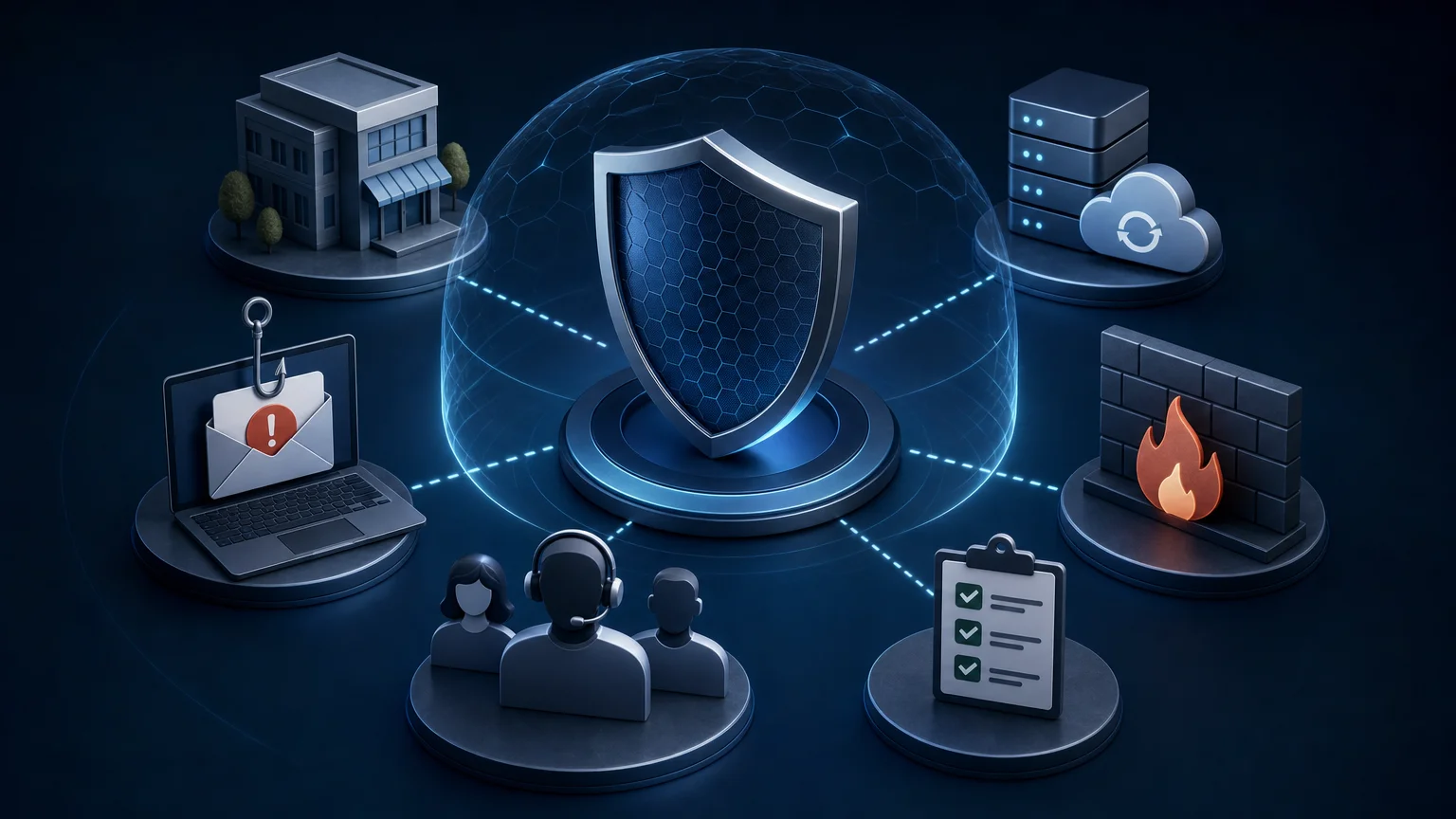
The CISA guidance cited for this article supports four clear priorities: maintain backups offline, encrypt and test those backups, account for phishing and unsecured Remote Desktop Protocol (RDP) exposure, and identify IT security personnel who can be available and on call during a ransomware event.
Protect backups from ransomware access
CISA notes that backups should be maintained offline because many ransomware variants attempt to locate and delete or encrypt backups that are accessible.
For organizations, the practical planning question is straightforward: which backups would remain available if systems or storage currently reachable from the environment were encrypted? The available research does not establish a specific backup architecture or retention schedule, but it does establish the importance of keeping backups offline.
Make backup testing a preparedness activity
CISA advises organizations to make and maintain offline, encrypted backups and to test backups regularly.
Teams can use that guidance to review who is responsible for backup testing and how the organization tracks the results. This article does not prescribe a test frequency or restoration procedure because those details are not established by the supplied evidence.
Prioritize phishing and unsecured RDP exposure
The cited CISA advisory states that, while cybercriminals use a variety of methods to infect ransomware victims, the two most prevalent initial access vectors are phishing and brute forcing unsecured RDP endpoints.
For defenders, these findings provide two areas to consider during ransomware preparedness discussions:
Phishing: Consider who is responsible for recognizing, reporting, and handling suspicious messages within the organization.
Unsecured RDP: Identify whether the organization has RDP endpoints and ensure their exposure and security ownership are understood.
The supplied research does not provide configuration steps or product-specific hardening guidance, so security teams should avoid treating this summary as a substitute for a tailored technical review.
Decide who is available during an incident
The FBI and CISA recommend identifying IT security employees who will be available and on call in the event of a ransomware attack.
For an organization, this can provide a starting point for identifying who should be contacted if an incident occurs. The verified evidence establishes the recommendation to identify available and on-call IT security personnel, but it does not prescribe a specific incident-management structure.
A concise ransomware preparedness checklist
Use the following questions as a discussion aid based on the available CISA-backed evidence:
Are backups maintained offline?
Are backups encrypted?
Are backups tested regularly?
Have phishing and unsecured RDP endpoints been considered as ransomware initial access risks?
Are IT security personnel identified to be available and on call if a ransomware attack occurs?
These questions do not form a complete ransomware program. They provide a starting set of priorities based on the verified CISA guidance available for this draft.
Sources
Key Takeaways
Maintain backups offline because ransomware may attempt to delete or encrypt accessible backups.
CISA advises maintaining offline, encrypted backups and testing them regularly.
The cited guidance identifies phishing and brute forcing unsecured RDP endpoints as the two most prevalent ransomware initial access vectors.
Identify IT security personnel who can be available and on call in the event of a ransomware attack.